The 7-Step Value-Based Proposal Framework
After 38 years of guiding commercial construction companies toward growth, one truth is clear from reviewing thousands of proposals: The ones that lose are generic, self-centered, and focus entirely on price. The ones that win, without exception, do something different. They tell a compelling story focused squarely on the client’s success.
The secret isn't working harder; it's working smarter by shifting your mindset. Your proposal is not just a quote; it's your first deliverable. It’s the primary tool to showcase your expertise, your value, and your unique understanding of the client's world.
This is how you craft a winning proposal using a proven, value-based framework.
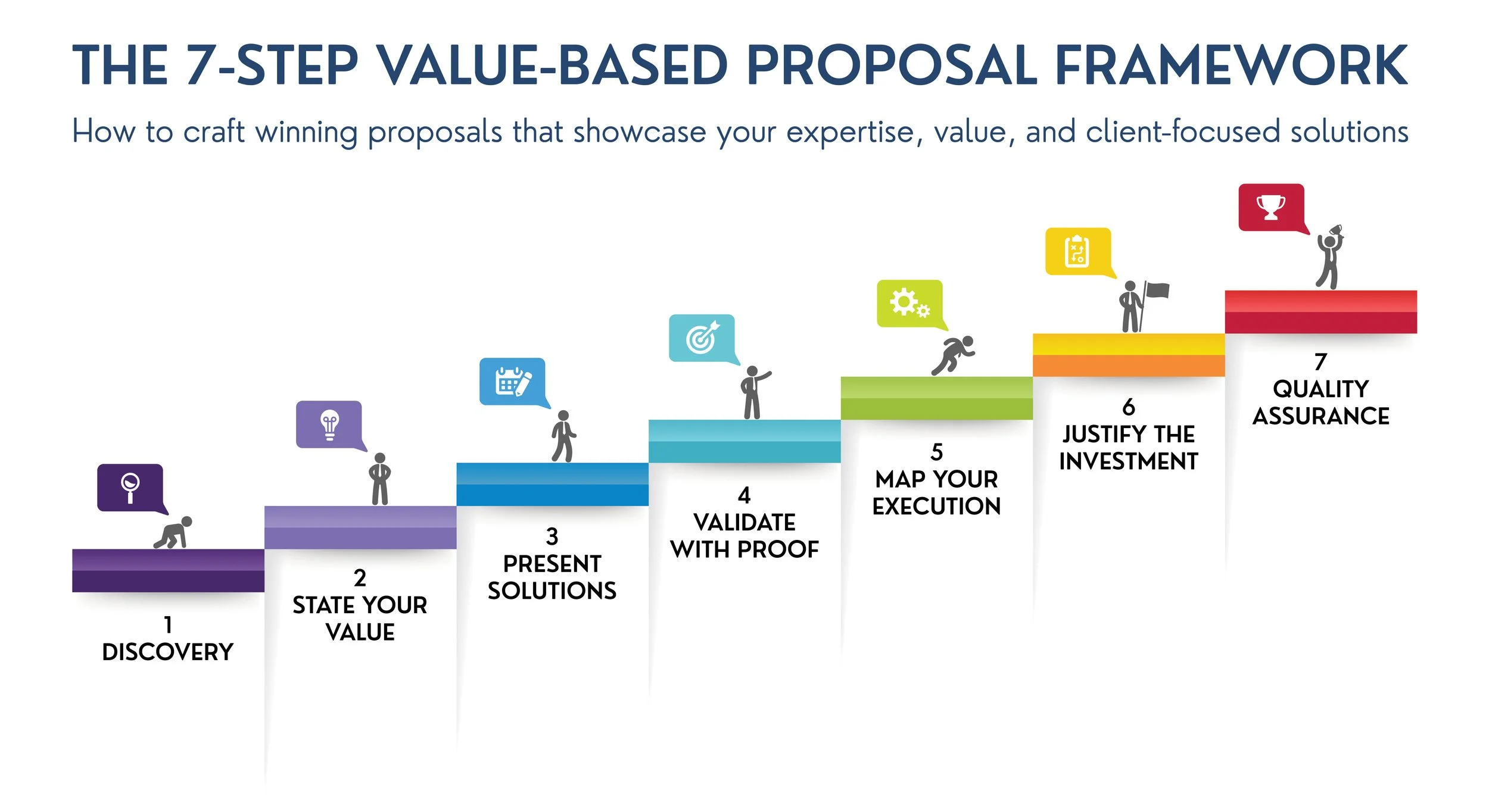
1. Discovery: Speak Their Language, Not Yours
Before you write a single word, you must listen. A winning proposal demonstrates that you’ve done your homework. Go beyond the RFP. Research your client's business, their market pressures, and their strategic goals.
Your executive summary should mirror their key concerns back to them. Use their language: “You mentioned that minimizing disruption to your 24/7 logistics operation is a top priority. Here is our dedicated approach to maintaining your workflow.” This immediate alignment shows you aren’t just another builder; you’re a partner who listens.
2. State Your Value: Why You, and Why Now?
This is where you separate your company from the pack. Don’t just list your services; quantify your differentiators. What specific capability gives you a competitive edge, and what is the tangible benefit to the client?
Showcase Specialized Capabilities: “Our in-house BIM coordination team has a proven track record of reducing change orders by an average of 22% on projects of similar complexity, protecting your budget and schedule.”
Prove Recent Success: “For a $24M automotive parts plant, our project management system enabled us to deliver the facility 14 days ahead of schedule, allowing the client to begin production early.”
3. Present Solutions: Map Your Approach to Their Needs
Clients don’t buy buildings; they buy solutions. Structure your proposal to directly address each of their requirements. Create a clear timeline with specific checkpoints that show progress toward their goals.
Direct Mapping: “In response to Section 5 Metal Requirements: We will utilize locally-sourced, AISC-certified steel from our preferred vendor to mitigate supply chain risk and prevent delays.”
Offer Tangible Options: “Value Engineering Option: We present a pre-cast wall system as an alternative to cast-in-place, which historical data shows can save approximately 6 weeks on the critical path for a project of this scope.”
4. Validate with Proof: Build Trust Through Evidence
Anyone can make claims. Winners back them up with irrefutable evidence. Build trust by showcasing your relevant experience and the qualified people who will be on the job.
Feature Similar Projects: Include case studies of completed work that mirrors the client’s scope and challenges.
Showcase Your Team: Highlight key personnel, noting their project-specific experience and credentials (LEED AP, DBIA, PMP, OSHA 30).
Promote Your Record: “Our Experience Modification Rate (EMR) is 0.74, significantly lower than the industry average, which translates to a safer site and potential insurance savings for you.”
5. Map Your Execution: Show You’ve Thought of Everything
Confidence is born from a clear plan. Show the client you have a meticulous roadmap for success. Provide a high-level project schedule (using a clean Gantt chart) and outline your proactive risk management strategies. Read my blog on How To Leverage Precon & Value Engineering Services. This section demonstrates your project management expertise and gives them peace of mind that their project is in capable hands.
6. Justify the Investment: Demonstrate Financial Clarity
Price is what you pay; value is what you get. Your pricing section must clearly articulate the value behind the numbers.
Develop Pricing Tiers: Offer clear options that align with different levels of solution, such as a base bid and defined alternates.
Demonstrate ROI: If your solution offers long-term savings (e.g., energy efficiency), present the financial impact.
Provide a Clear Payment Breakdown: A preliminary project burn rate chart shows you understand cash flow and provides budget transparency, ensuring peace of mind.
7. Quality Assurance: The Final, Critical Step
Your proposal is a reflection of the quality they can expect in the field. Errors, inconsistencies, or unclear statements diminish trust instantly.
Be Concise and Clear: Eliminate industry jargon. Ensure every sentence is easy to understand.
Conduct a Team Review: Before sending, have a colleague who hasn’t seen the draft review it. A fresh set of eyes is the best defense against typos and confusing language.
Gather Feedback: Win or lose, ask the client for feedback on your proposal. This is the single most powerful practice for continuous improvement. Understanding why you lost is more valuable than knowing why you won.
The Foundation of Growth
Adopting this 7-Step Framework transforms your proposal from a simple bid into a strategic instrument for growth. It forces you to focus on the client’s value drivers, articulate your differentiators with proof, and present a flawless document that builds unwavering confidence. Stop competing on price. Start winning on value.
Thanks for reading,
Lorraine Cline DeShiro