Most Commercial Contractors Don't Have a Pipeline Problem
They have a predictability problem.
And the difference matters, because a commercial contractor can be fully booked every quarter and still feel like they're starting from scratch every January. Projects end, relationships shift, and the next opportunity gets built from the ground up, because there was never a system in place to keep things moving between bids.
The contractors who've solved this aren't necessarily winning more work than everyone else. They're doing something different with the relationships they already have. They're staying visible between pursuits, not just during them. They're creating consistent touchpoints with owners, economic development leaders, architects, and engineers so that when a project lands on someone's desk, their name is already in the room before the RFP ever goes out.
That's what predictable revenue actually looks like in construction. It doesn't mean you know exactly what's coming in next quarter, but it does mean you have a system working in the background, keeping your company relevant with the right people, at the right time, consistently.
The contractors who get this right tend to see their negotiated work increase over time, because owners bring them into conversations early instead of running a hard bid. They're not always the lowest number, they're just better positioned, and positioning is a marketing function.
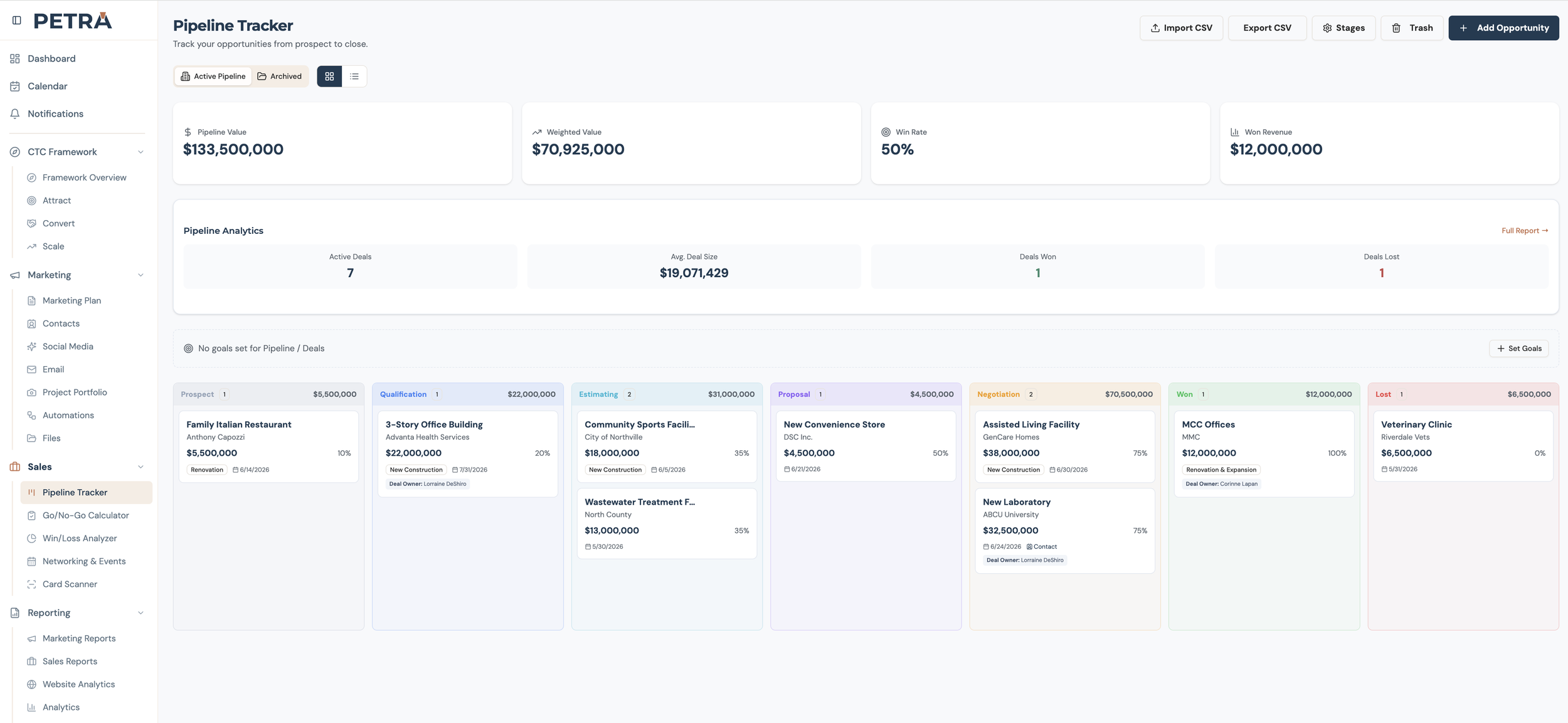
This is what encouraged us to create the Contacts to Contracts Framework—the three pillar system that provides commercial contractors with a marketing system to help keep their pipelines filled with more profitable work for more ideal clients. Pipeline building is exactly the kind of work that contractors know they should be doing and somehow never quite get to, because it feels like it lives outside of the project work. But it is the project work, just the kind that happens 12 to 18 months before you ever see a scope of work.
If your pipeline feels lumpy, inconsistent, or too dependent on a handful of relationships held by one or two people in your company, that's worth paying attention to.
What does your current process look like for staying in front of owners, architects, and engineers between active pursuits?